
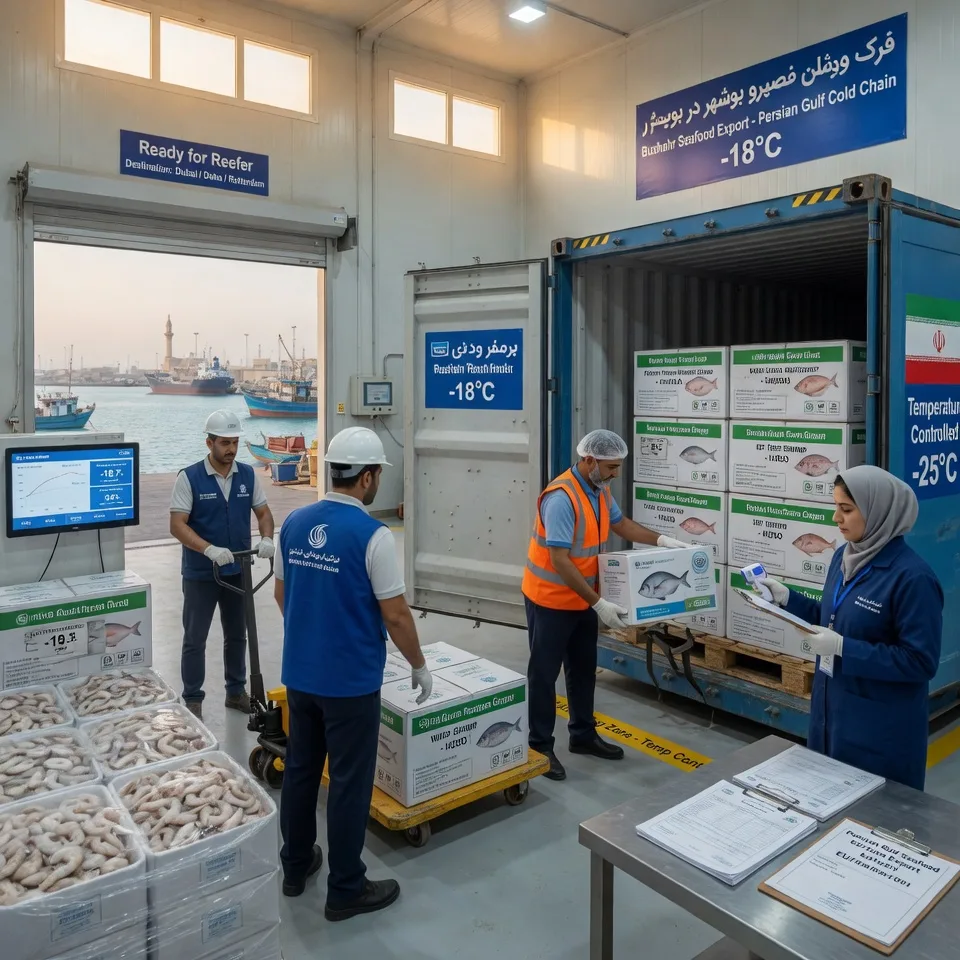
Introduction
Seafood is one of the most temperature-sensitive categories in international trade. Fish and shrimp can quickly lose quality if the cold chain is interrupted at any point between storage, loading, transport, and delivery. For this reason, cold chain logistics are not just an operational detail—they are a core part of product quality assurance.
For importers, understanding cold chain logistics helps reduce risk and protect commercial value. It also helps buyers evaluate whether an exporter is prepared to handle seafood professionally.
1. What Is the Cold Chain?
The cold chain is the continuous temperature-controlled system used to store and transport temperature-sensitive goods. In seafood trade, this includes:
- frozen storage
- pre-loading handling
- loading operations
- reefer truck transport if needed
- reefer container shipment
- receiving procedures at destination
The goal is simple: keep the product at the required temperature without interruption.
2. Why Temperature Stability Matters
When seafood is exposed to improper temperatures, several risks can appear:
- texture deterioration
- surface dehydration
- quality inconsistency
- loss of product appearance
- reduced shelf life
- commercial complaints from buyers
Even short breaks in temperature control can create avoidable problems. That is why professional exporters pay close attention to warehouse conditions, loading speed, and reefer management.
3. Cold Storage Before Shipment
Before shipment, seafood should be stored in proper cold storage facilities. Exporters should organize inventory efficiently so that products can be loaded quickly and safely. Good warehouse management reduces unnecessary handling and minimizes exposure to ambient temperatures.
Buyers should ask whether the product is held in cold storage before dispatch and whether loading is planned in a way that protects the product.
4. Loading and Reefer Coordination
Loading is one of the most sensitive stages. If the loading area is poorly organized, cartons may remain outside temperature control for too long. A professional loading process should be efficient, planned, and coordinated with reefer container availability.
Reefer containers play a critical role in frozen seafood export. They help maintain the required environment during transportation. This allows exporters to move seafood over long distances while protecting product condition.
5. Monitoring and Quality Assurance
Temperature monitoring is an important part of seafood logistics. Monitoring tools and loading discipline help exporters maintain standards and reduce claims. Strong logistics coordination also helps importers feel more confident about product handling.
6. The Buyer’s Perspective
International buyers should not treat logistics as a secondary issue. A good product with weak logistics can become a problem shipment. When selecting a supplier, buyers should assess whether the company understands cold chain discipline, timing, storage, and export readiness.
Conclusion
Cold chain logistics protect seafood quality, buyer trust, and long-term trade relationships. For fish and shrimp exports from Bushehr and the Persian Gulf, strong temperature-controlled logistics are essential. Buyers who understand this process make better sourcing decisions and reduce import risk.






Customer Reviews
Nemo enim ipsam voluptatem quia voluptas sit aspernatur aut odit aut fugit, sed quia consequans magni dolores eos qui ratione voluptatem sequi nesciunt.
Nemo enim ipsam voluptatem quia voluptas sit aspernatur aut odit aut fugit
Nemo enim ipsam voluptatem quia voluptas sit aspernatur aut odit aut fugit, sed quia conse quans magni dolores eos qui ratione voluptatem sequi nesciunt.