
Introduction
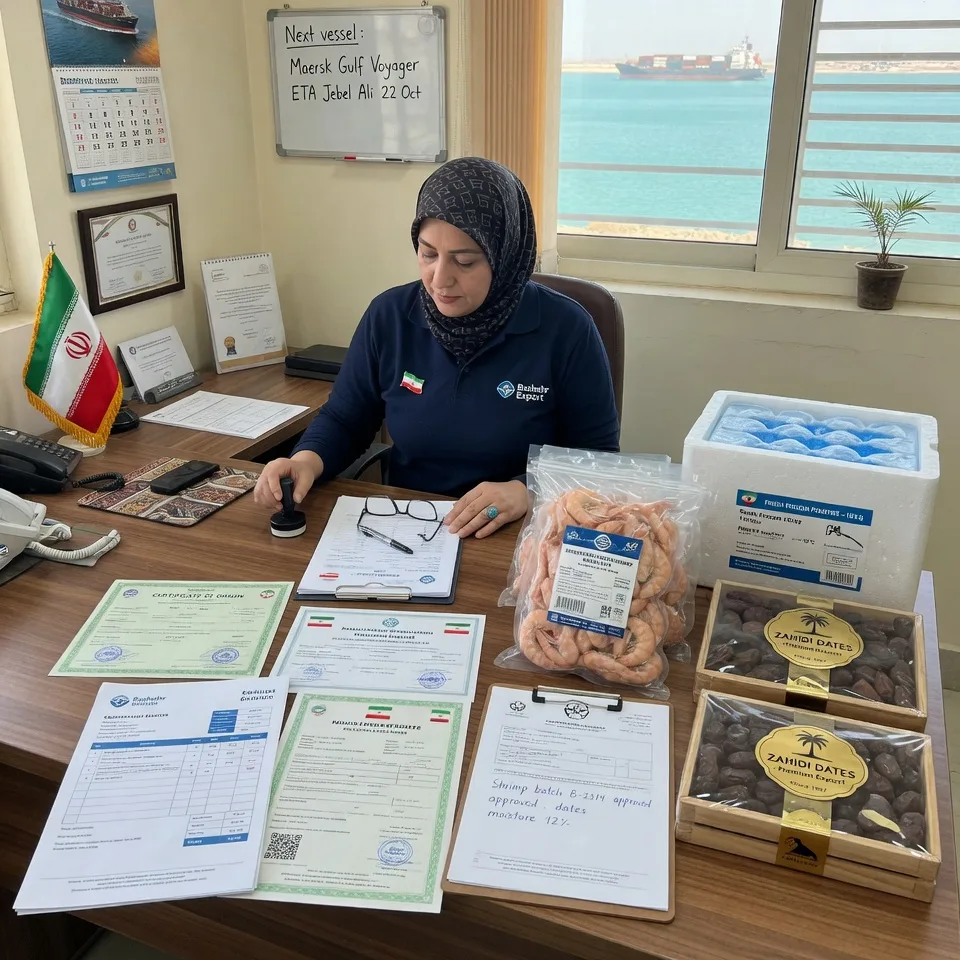
In export business, even a well-prepared shipment can face delays if documentation is incomplete or inconsistent. This is especially true for food products such as fish, shrimp, and dates. Buyers and importers need accurate paperwork to support customs clearance, compliance, traceability, and market entry requirements.
For this reason, documentation should be discussed early in the order process—not after production is complete.
1. Why Export Documents Matter
Export documents serve several purposes:
- they identify the goods
- they support customs procedures
- they confirm transaction details
- they provide product and shipment information
- they help meet destination market requirements
Without proper documentation, the importer may face delays, additional costs, or clearance complications.
2. Common Documents in Food Export
The exact document set depends on the destination, product type, and buyer requirements. However, common documents often include:
- Commercial Invoice
- Packing List
- Certificate of Origin
- Health Certificate
- Halal Certificate
- Bill of Lading or transport-related documents
- Customs and clearance-related supporting documents
Each of these documents has a specific role. For example, the commercial invoice reflects transaction details, while the packing list shows packaging structure and quantities.
3. Documents for Seafood Shipments
For fish and shrimp exports, documentation is especially important because the products are food items and often temperature-sensitive. Importers may need proof of product handling standards, shipment details, and health-related documentation.
The exporter should prepare documents carefully so that the information across the invoice, packing list, and certificates is consistent.
4. Documents for Dates and Date Products
Dates and date-based products also require organized export paperwork. Depending on the destination, buyers may ask for certificates or product-related declarations. This is particularly relevant when shipping to professional retail or wholesale markets that require formal supply records.
5. Why Halal and Compliance Matter
For many Arabic-speaking and Muslim-majority markets, halal documentation can be an important trust factor. Even when not strictly mandatory in every case, it can improve buyer confidence and support smoother market acceptance.
6. Best Practices for Buyers
Buyers should:
- confirm required documents before placing the order
- coordinate with customs brokers or clearance teams
- check whether original or digital copies are needed
- verify consistency of names, weights, and quantities
- communicate destination-specific compliance requirements in advance
Conclusion
Documentation is a foundation of smooth international trade. Whether the shipment contains fish, shrimp, dates, or date products, buyers should treat export paperwork as a key part of sourcing strategy. Clear communication and proper document preparation reduce delays and protect the success of the shipment.







Customer Reviews
Nemo enim ipsam voluptatem quia voluptas sit aspernatur aut odit aut fugit, sed quia consequans magni dolores eos qui ratione voluptatem sequi nesciunt.
Nemo enim ipsam voluptatem quia voluptas sit aspernatur aut odit aut fugit
Nemo enim ipsam voluptatem quia voluptas sit aspernatur aut odit aut fugit, sed quia conse quans magni dolores eos qui ratione voluptatem sequi nesciunt.